

Facts & History
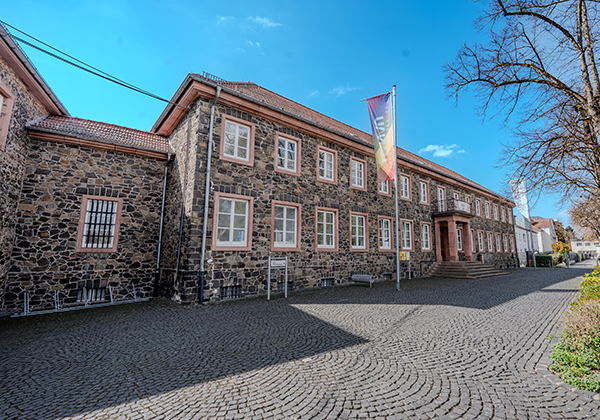
Baugesellschaft Hanau was founded on September 28, 1942, as a non-profit housing company, inheriting the legacy of the building cooperative which held around 100 apartments at the time. From the very beginning, there was one primary mission: to create living space for the people of Hanau. Following the devastating destruction of the Second World War, BauGe played a decisive role in the city’s reconstruction. Over the decades, it has grown continuously and is now one of the major municipal housing providers in the Rhine-Main region, managing approximately 4,200 apartments—with the aim of providing affordable, modern, and livable housing for everyone. BauGe stands for stable neighborhoods and assumes social responsibility. It combines the preservation of its portfolio with continuous modernization and sustainable urban development. The focus is on quality of life, reliable service for tenants, and investments in climate protection and the future viability of the housing stock.
Our History
1942 – 1949
Founding and Reconstruction
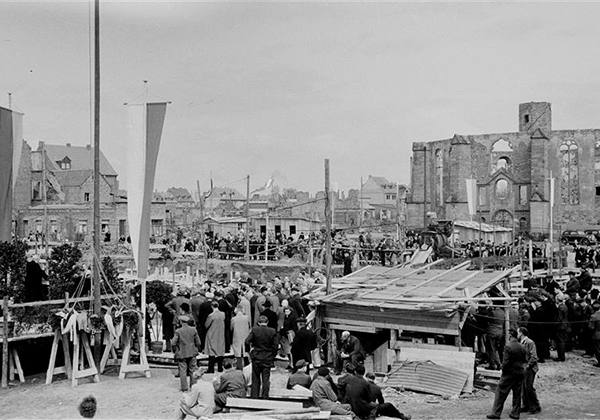
Baugesellschaft Hanau was founded in 1942 as a non-profit housing company and initially managed around 100 apartments. Following the destruction of the Second World War, the focus shifted to reconstruction. During a time of great housing shortages, the company created urgently needed living space, giving many people in Hanau a home and new perspectives once again.
1950 – 1970
Growth and Stability
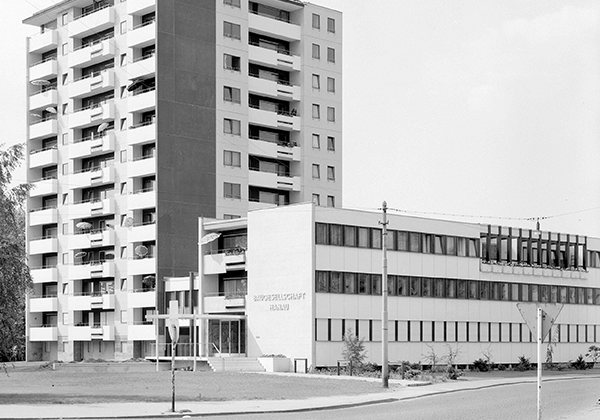
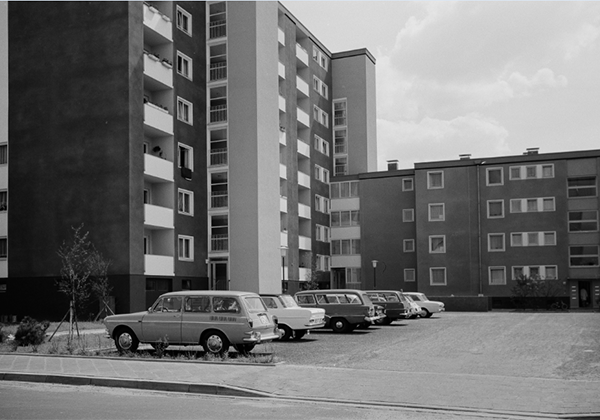
In the post-war decades, the housing stock grew continuously. New residential complexes were built, and existing neighborhoods were further developed. By 1963, more than 2,400 apartments had been created under the management of the Baugesellschaft. In addition to its role as a developer, BauGe increasingly acted as a planner and construction supervisor for private investors during the 1960s. The company became a vital pillar of municipal housing supply and made a decisive contribution to social stability and the structural development of the city of Hanau.
1970 – 2000
Modernization and Further Development
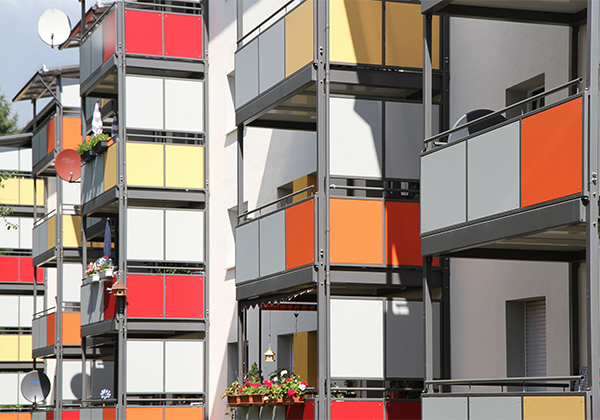
With increasing demands for comfort and quality of life, the focus shifted toward modernization, maintenance, and initial energy efficiency improvements. The portfolio was gradually updated to modern standards through measures such as new heating systems, bathrooms, and facade renovations. At the same time, the responsibility for vibrant neighborhoods and good community relations within the districts grew.
2000 – 2020
Urban Development and New Forms of Living
Since the 2000s, Baugesellschaft has been actively involved in urban development processes, such as the moderated urban development process with citizen participation. An example of this is the François-Gärten residential quarter with its striking water axis between the rows of houses. The 2010s saw an increase in modern new buildings, barrier-free and family-friendly apartments, some of which were built using timber-hybrid construction and contemporary energy standards.
Since 2020
Shaping the Future
Today, Baugesellschaft manages around 4,200 apartments, combining affordable living with climate protection and expanding its digital services, for example, through the introduction of a tenant app.


