

Heritage Protection
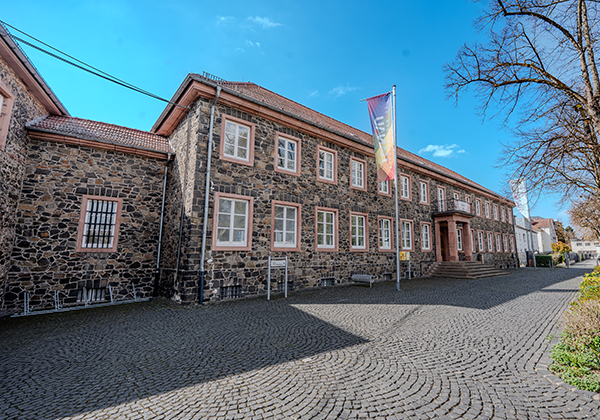
Heinrich-Bott-Straße 1
The building at Heinrich-Bott-Street 1, constructed in 1939, is part of a difficult history. It dates back to the National Socialist era and served as a police station with an attached prison. The current management of the building takes its historical significance into account. The house is one of the few surviving buildings from this era in Hanau. Its stone facade with sandstone surrounds and the striking grand staircase are inspired by older neighboring buildings. Today, it houses the administration of Baugesellschaft Hanau – and we handle this heritage consciously and responsibly.
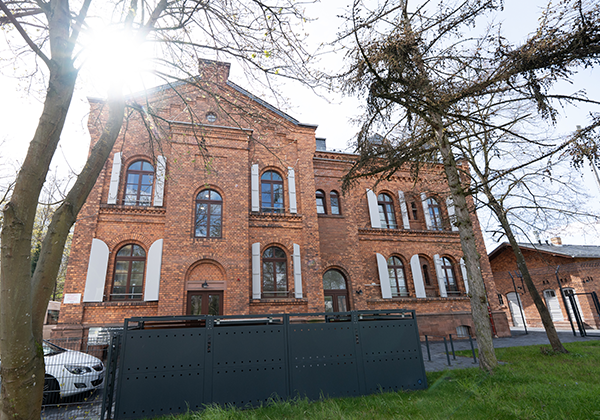
Vor der Pulvermühle 1 + 10
The building at Vor der Pulvermühle 1 in the Wolfgang district is a special part of Hanau’s history. The listed railway house from 1878 dates back to the era of the gunpowder factory and is part of the former brick-style workers’ settlement. A cannon as a weather vane adorns the roof. Following modernization, the building has been used as a residential facility of BWMK since September 2025. In the immediate vicinity is the former director’s house of the gunpowder factory: Vor der Pulvermühle 10. The building dates from 1892 and has already served several purposes, including as a school and as a branch office of the Hanau Labour Court. We are currently modernizing the building.
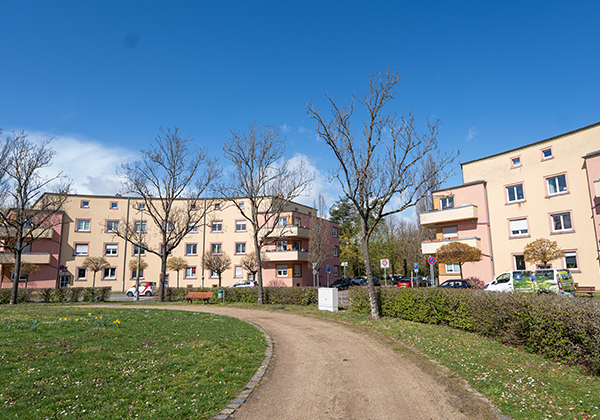
Beethovenplatz
The buildings at Beethovenstraße 1–12 represent a special piece of urban history. Previously, this was the turning circle for the Hanau tram, making it an important transport hub. The listed circular building, constructed in 1926, encloses the Schwanenbrunnen (Swan Fountain) from 1890 and forms the “Gateway to the West,” marking the transition between the city center and western urban areas. The house numbers run from 1 to 12 in a circle, following the enclosed architectural form of the complex, which has been preserved as an urban ensemble to this day. In 2002, the complex was carefully restored to its original color scheme and adapted to modern usage requirements.
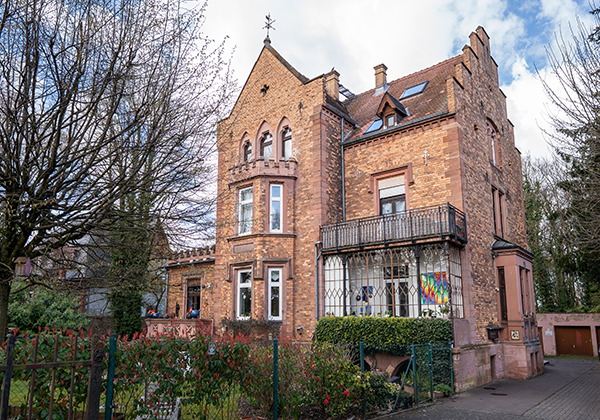
Philippsruher Allee 26
In 1875, the picturesque, intricately built villa in a scenic location was constructed for August Limbert. He had become wealthy as a banker in America and returned to Hanau. Today, the villa is one of the best-preserved and most expressive examples of Hanau’s villa culture, which was almost completely lost due to the war. The house is also known as “Wasserschlösschen” (Water Castle) and offers a quiet, personal atmosphere with only five apartments. A charming detail: the self-made ceramic chickens by Hanau artist Uta Goebler, which are placed as part of the garden ensemble around the pond and are visible from the street.
Port / Westerburgstraße
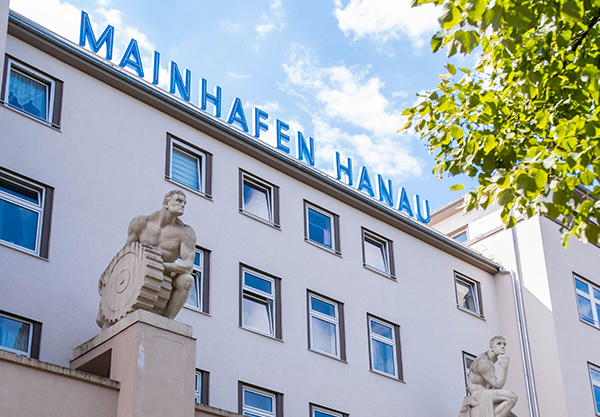
The district in Hanau’s Main port connects history with new life. Built between 1924 and 1927, it provided housing for many workers, employees, and officials of the Main port. Still striking today are the two monumental figures symbolizing trade and labor, popularly known as “Käs’roller” (cheese rollers). During the war, some of the residential buildings were partially destroyed and rebuilt in the 1950s. At times, about a third of the apartments stood vacant in later years – which is why we offered them for self-completion at favorable rental prices. We also brought art and culture to the port entrance. There are now nine studios, along with a district office and the port café.


